A common misconception in DeFi is that a wallet merely “sends” a transaction. That description works for a simple transfer of ETH, but it becomes misleading the moment a user trades on an exchange, supplies assets to a lending market, mints a token, or approves a protocol to spend funds. In those cases, the wallet is helping authorize a program to change blockchain state. The important question is not only whether a transaction succeeds. It is what the contract is being asked to do, which assets it can move, and whether the result matches the user’s intention.
This distinction explains why modern wallet design has moved beyond address management and balance display. A useful DeFi wallet acts more like an interpretation layer between human intent and machine-executed code. It can surface contract addresses, token approvals, network changes, estimated outcomes, and suspicious behavior before a user signs. Those controls do not make smart contracts safe by default, but they can reduce the gap between what a transaction appears to mean and what it actually authorizes.
From simple transfers to programmable finance
Early cryptocurrency wallets trained users to think in terms of sending and receiving. A sender chose an address, entered an amount, paid a network fee, and signed. Smart contracts changed the model. Instead of transferring an asset directly, a user often calls a function in a contract. That function may route a swap through several pools, issue a loan, lock collateral, update a position, or grant another address permission to spend tokens later.
The transaction itself contains instructions and parameters. A decentralized exchange call, for example, may include the token being sold, the token expected in return, a deadline, a recipient, and a minimum acceptable output. A lending transaction may identify collateral, an interest-bearing position, and a market contract. The wallet does not decide whether those protocol rules are economically attractive; it helps the user understand what is being signed and broadcasts the authorization to the network.
This is why “the transaction failed” and “the transaction was dangerous” are different categories. A failed transaction may consume network fees without changing the intended state. A successful transaction can be worse if it approves an unintended spender or sends assets to an incorrect contract. Technical success is not evidence of economic safety.
The practical case: a token swap on an EVM network
Consider a US-based DeFi user who wants to swap one stablecoin for another on an Ethereum-compatible network. The visible action looks simple: choose the asset, enter an amount, review the quoted output, and confirm. Underneath, the interaction may involve two separate steps. First, the user grants an allowance to a token contract, permitting a spender to use some amount of the token. Second, the user calls a swap contract, which may execute one or more internal transfers.
An allowance is not the same as a payment. It is a permission. Depending on the token and the approval parameters, the permission may be limited to the current amount or may remain available for future transactions. That difference matters because a compromised or malicious spender could potentially use an active allowance later, even when the user is no longer looking at the original website.
Transaction simulation can make this relationship easier to inspect. A simulation attempts to model the likely result of signing without committing the action to the blockchain. It may show that a user will lose one token, receive another, create an approval, or interact with a contract associated with a particular protocol. In practical terms, simulation changes the review process from reading raw calldata—encoded machine instructions—to examining a predicted state change.
That is a significant improvement, but it is not a crystal ball. A simulation depends on the current blockchain state, the accuracy of the simulation environment, and the behavior of contracts during execution. Market prices can move, liquidity can change, a transaction can be reordered, or a contract can behave differently under conditions the simulation does not capture. The right mental model is “pre-execution analysis,” not a guarantee.
What a security-aware wallet can and cannot detect
Wallet security features are most useful when they expose hidden structure. A warning about an unfamiliar contract can prompt a user to check whether the domain, protocol, and network are correct. An approval alert can make a long-lived spending permission visible. A simulation can reveal an unexpected recipient or an output that is materially different from the user’s expectation. These signals are valuable because many losses begin with an interaction that looked ordinary at the signing stage.
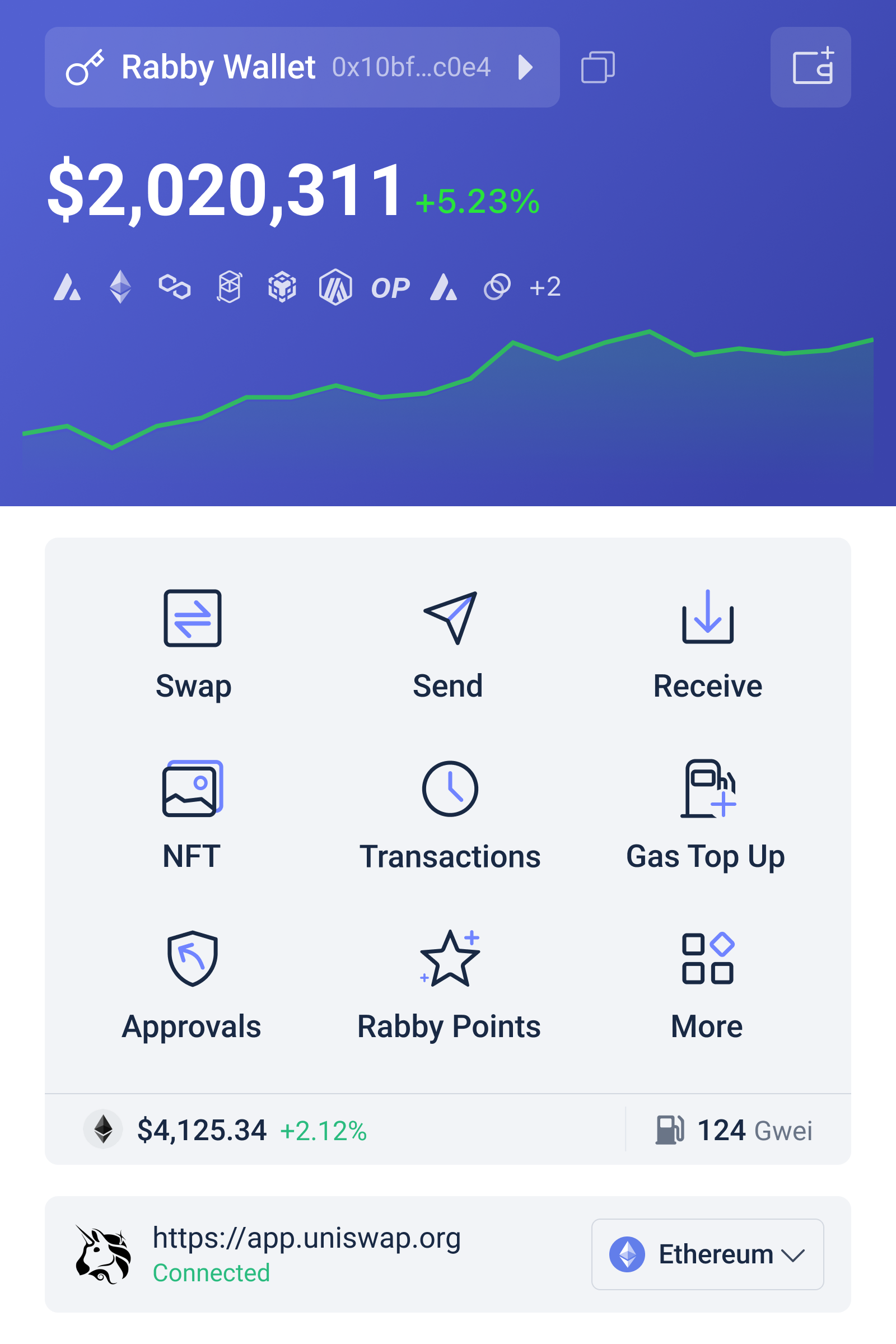
For users who regularly move between Ethereum and other EVM chains, chain awareness is equally important. The same token symbol can exist on multiple networks, while similarly named contracts can have completely different code and trust assumptions. A wallet such as rabby wallet is useful in this context when it helps organize those decisions around the actual chain, contract, and expected result rather than treating every signature as an undifferentiated confirmation.
There is, however, a boundary that no interface can remove. A legitimate contract can contain an economic risk that is not technically malicious. A lending market may face liquidation risk. A liquidity provider may experience impermanent loss or adverse selection. A bridge may rely on a validator or message-verification design that the user has not independently assessed. A clean simulation can show what the contract is likely to do without proving that the protocol will remain solvent, fairly governed, or economically sensible.
Nor can a wallet reliably infer human intent in every case. If a user deliberately deposits collateral, the resulting balance change may resemble a loss even though a claim on a lending position was created. If a swap uses a complex aggregator, several internal transfers may appear in the trace. Security tools must therefore balance warning sensitivity with usability. Too few warnings leave blind spots; too many can train users to click through alerts without reading them.
A better framework for reviewing DeFi interactions
Before signing, experienced users can separate the review into four questions. First: what am I authorizing now? This identifies the contract call, approval, permit, deposit, or transfer. Second: what can happen later? This is especially important for allowances, delegated permissions, and signatures that remain valid beyond the current screen. Third: what do I expect to receive or change? The answer should be expressed in assets, balances, positions, or permissions—not merely in the name of a button. Fourth: what assumption would make this interaction unsafe?
The fourth question is often the most valuable. For a swap, the assumption may be that the quoted route remains executable and that slippage is acceptable. For a lending protocol, it may be that collateral prices will not cross a liquidation threshold. For a bridge, it may be that the verification system will process the message correctly. Naming the assumption turns a vague feeling of safety into a testable risk judgment.
This framework also clarifies why transaction simulation and contract reputation should be used together. Simulation focuses on the predicted immediate effect. Reputation and code review address broader questions about who deployed the contract, whether its behavior is understood, and how it has operated over time. Neither replaces the other. A familiar protocol can change its contracts, and an unfamiliar contract can produce a harmless-looking result while retaining dangerous permissions.
What changed in the current wallet landscape
The historical shift is from wallets as key containers to wallets as transaction interpretation systems. As DeFi protocols became more composable, a single user action could involve several contracts and a chain of dependent assumptions. Wallets that support many Ethereum Virtual Machine networks now need to help users distinguish not just one address from another, but one execution environment from another.
Recent messaging around Rabby emphasizes Ethereum and EVM coverage, speed, security, and an extension experience for browsers such as Chrome and Brave. The meaningful question for users is not whether a wallet uses broad security language. It is whether its interface helps them make fewer category errors: signing on the wrong network, approving an unintended spender, mistaking a contract call for a transfer, or accepting an output they never meant to authorize.
Looking ahead, the most useful wallet improvements are likely to be conditional rather than purely visual. If simulation becomes more accurate across complex protocols, users may receive clearer state-change explanations. If account abstraction and delegated execution become more common, permission review will matter even more because a signature may authorize a policy rather than one isolated transaction. These developments would improve usability only if users can still see the limits of the prediction and the duration of the permission.
FAQ: smart contract interaction in DeFi
Is a smart contract interaction the same as sending tokens?
No. A direct transfer moves an asset from one address to another. A contract interaction calls program logic that may move assets, create permissions, update a position, or trigger several internal actions. The wallet should help distinguish the requested function from the final state change.
Does transaction simulation guarantee that a DeFi transaction is safe?
No. Simulation estimates what may happen under a particular blockchain state and execution model. It can expose unexpected transfers or permissions, but it cannot guarantee protocol solvency, future market conditions, contract integrity, or protection from every execution difference.
Why should users pay attention to token approvals?
An approval grants a spender permission to use a token on the user’s behalf. If the allowance remains active, the permission may matter after the original transaction is complete. Users should verify the spender, the approved amount, and whether the permission is still needed.
The central lesson is simple but easy to miss: signing is not the moment when a wallet sends money; it is the moment when a user authorizes code to act within defined boundaries. A capable interface makes those boundaries easier to inspect. The final responsibility remains shared among the wallet, the protocol, and the user—but better interpretation gives the user a more informed place to begin.