namespace Elementor; use Elementor\Core\Admin\Menu\Admin_Menu_Manager; use Elementor\Core\Wp_Api; use Elementor\Core\Admin\Admin; use Elementor\Core\Breakpoints\Manager as Breakpoints_Manager; use Elementor\Core\Common\App as CommonApp; use Elementor\Core\Debug\Inspector; use Elementor\Core\Documents_Manager; use Elementor\Core\Experiments\Manager as Experiments_Manager; use Elementor\Core\Kits\Manager as Kits_Manager; use Elementor\Core\Editor\Editor; use Elementor\Core\Files\Manager as Files_Manager; use Elementor\Core\Files\Assets\Manager as Assets_Manager; use Elementor\Core\Modules_Manager; use Elementor\Core\Schemes\Manager as Schemes_Manager; use Elementor\Core\Settings\Manager as Settings_Manager; use Elementor\Core\Settings\Page\Manager as Page_Settings_Manager; use Elementor\Core\Upgrade\Elementor_3_Re_Migrate_Globals; use Elementor\Modules\History\Revisions_Manager; use Elementor\Core\DynamicTags\Manager as Dynamic_Tags_Manager; use Elementor\Core\Logger\Manager as Log_Manager; use Elementor\Core\Page_Assets\Loader as Assets_Loader; use Elementor\Modules\System_Info\Module as System_Info_Module; use Elementor\Data\Manager as Data_Manager; use Elementor\Data\V2\Manager as Data_Manager_V2; use Elementor\Core\Common\Modules\DevTools\Module as Dev_Tools; use Elementor\Core\Files\Uploads_Manager as Uploads_Manager; if ( ! defined( 'ABSPATH' ) ) { exit; } /** * Elementor plugin. * * The main plugin handler class is responsible for initializing Elementor. The * class registers and all the components required to run the plugin. * * @since 1.0.0 */ class Plugin { const ELEMENTOR_DEFAULT_POST_TYPES = [ 'page', 'post' ]; /** * Instance. * * Holds the plugin instance. * * @since 1.0.0 * @access public * @static * * @var Plugin */ public static $instance = null; /** * Database. * * Holds the plugin database handler which is responsible for communicating * with the database. * * @since 1.0.0 * @access public * * @var DB */ public $db; /** * Controls manager. * * Holds the plugin controls manager handler is responsible for registering * and initializing controls. * * @since 1.0.0 * @access public * * @var Controls_Manager */ public $controls_manager; /** * Documents manager. * * Holds the documents manager. * * @since 2.0.0 * @access public * * @var Documents_Manager */ public $documents; /** * Schemes manager. * * Holds the plugin schemes manager. * * @since 1.0.0 * @access public * * @var Schemes_Manager */ public $schemes_manager; /** * Elements manager. * * Holds the plugin elements manager. * * @since 1.0.0 * @access public * * @var Elements_Manager */ public $elements_manager; /** * Widgets manager. * * Holds the plugin widgets manager which is responsible for registering and * initializing widgets. * * @since 1.0.0 * @access public * * @var Widgets_Manager */ public $widgets_manager; /** * Revisions manager. * * Holds the plugin revisions manager which handles history and revisions * functionality. * * @since 1.0.0 * @access public * * @var Revisions_Manager */ public $revisions_manager; /** * Images manager. * * Holds the plugin images manager which is responsible for retrieving image * details. * * @since 2.9.0 * @access public * * @var Images_Manager */ public $images_manager; /** * Maintenance mode. * * Holds the maintenance mode manager responsible for the "Maintenance Mode" * and the "Coming Soon" features. * * @since 1.0.0 * @access public * * @var Maintenance_Mode */ public $maintenance_mode; /** * Page settings manager. * * Holds the page settings manager. * * @since 1.0.0 * @access public * * @var Page_Settings_Manager */ public $page_settings_manager; /** * Dynamic tags manager. * * Holds the dynamic tags manager. * * @since 1.0.0 * @access public * * @var Dynamic_Tags_Manager */ public $dynamic_tags; /** * Settings. * * Holds the plugin settings. * * @since 1.0.0 * @access public * * @var Settings */ public $settings; /** * Role Manager. * * Holds the plugin role manager. * * @since 2.0.0 * @access public * * @var Core\RoleManager\Role_Manager */ public $role_manager; /** * Admin. * * Holds the plugin admin. * * @since 1.0.0 * @access public * * @var Admin */ public $admin; /** * Tools. * * Holds the plugin tools. * * @since 1.0.0 * @access public * * @var Tools */ public $tools; /** * Preview. * * Holds the plugin preview. * * @since 1.0.0 * @access public * * @var Preview */ public $preview; /** * Editor. * * Holds the plugin editor. * * @since 1.0.0 * @access public * * @var Editor */ public $editor; /** * Frontend. * * Holds the plugin frontend. * * @since 1.0.0 * @access public * * @var Frontend */ public $frontend; /** * Heartbeat. * * Holds the plugin heartbeat. * * @since 1.0.0 * @access public * * @var Heartbeat */ public $heartbeat; /** * System info. * * Holds the system info data. * * @since 1.0.0 * @access public * * @var System_Info_Module */ public $system_info; /** * Template library manager. * * Holds the template library manager. * * @since 1.0.0 * @access public * * @var TemplateLibrary\Manager */ public $templates_manager; /** * Skins manager. * * Holds the skins manager. * * @since 1.0.0 * @access public * * @var Skins_Manager */ public $skins_manager; /** * Files manager. * * Holds the plugin files manager. * * @since 2.1.0 * @access public * * @var Files_Manager */ public $files_manager; /** * Assets manager. * * Holds the plugin assets manager. * * @since 2.6.0 * @access public * * @var Assets_Manager */ public $assets_manager; /** * Icons Manager. * * Holds the plugin icons manager. * * @access public * * @var Icons_Manager */ public $icons_manager; /** * WordPress widgets manager. * * Holds the WordPress widgets manager. * * @since 1.0.0 * @access public * * @var WordPress_Widgets_Manager */ public $wordpress_widgets_manager; /** * Modules manager. * * Holds the plugin modules manager. * * @since 1.0.0 * @access public * * @var Modules_Manager */ public $modules_manager; /** * Beta testers. * * Holds the plugin beta testers. * * @since 1.0.0 * @access public * * @var Beta_Testers */ public $beta_testers; /** * Inspector. * * Holds the plugin inspector data. * * @since 2.1.2 * @access public * * @var Inspector */ public $inspector; /** * @var Admin_Menu_Manager */ public $admin_menu_manager; /** * Common functionality. * * Holds the plugin common functionality. * * @since 2.3.0 * @access public * * @var CommonApp */ public $common; /** * Log manager. * * Holds the plugin log manager. * * @access public * * @var Log_Manager */ public $logger; /** * Dev tools. * * Holds the plugin dev tools. * * @access private * * @var Dev_Tools */ private $dev_tools; /** * Upgrade manager. * * Holds the plugin upgrade manager. * * @access public * * @var Core\Upgrade\Manager */ public $upgrade; /** * Tasks manager. * * Holds the plugin tasks manager. * * @var Core\Upgrade\Custom_Tasks_Manager */ public $custom_tasks; /** * Kits manager. * * Holds the plugin kits manager. * * @access public * * @var Core\Kits\Manager */ public $kits_manager; /** * @var \Elementor\Data\V2\Manager */ public $data_manager_v2; /** * Legacy mode. * * Holds the plugin legacy mode data. * * @access public * * @var array */ public $legacy_mode; /** * App. * * Holds the plugin app data. * * @since 3.0.0 * @access public * * @var App\App */ public $app; /** * WordPress API. * * Holds the methods that interact with WordPress Core API. * * @since 3.0.0 * @access public * * @var Wp_Api */ public $wp; /** * Experiments manager. * * Holds the plugin experiments manager. * * @since 3.1.0 * @access public * * @var Experiments_Manager */ public $experiments; /** * Uploads manager. * * Holds the plugin uploads manager responsible for handling file uploads * that are not done with WordPress Media. * * @since 3.3.0 * @access public * * @var Uploads_Manager */ public $uploads_manager; /** * Breakpoints manager. * * Holds the plugin breakpoints manager. * * @since 3.2.0 * @access public * * @var Breakpoints_Manager */ public $breakpoints; /** * Assets loader. * * Holds the plugin assets loader responsible for conditionally enqueuing * styles and script assets that were pre-enabled. * * @since 3.3.0 * @access public * * @var Assets_Loader */ public $assets_loader; /** * Clone. * * Disable class cloning and throw an error on object clone. * * The whole idea of the singleton design pattern is that there is a single * object. Therefore, we don't want the object to be cloned. * * @access public * @since 1.0.0 */ public function __clone() { _doing_it_wrong( __FUNCTION__, sprintf( 'Cloning instances of the singleton "%s" class is forbidden.', get_class( $this ) ), // phpcs:ignore WordPress.Security.EscapeOutput.OutputNotEscaped '1.0.0' ); } /** * Wakeup. * * Disable unserializing of the class. * * @access public * @since 1.0.0 */ public function __wakeup() { _doing_it_wrong( __FUNCTION__, sprintf( 'Unserializing instances of the singleton "%s" class is forbidden.', get_class( $this ) ), // phpcs:ignore WordPress.Security.EscapeOutput.OutputNotEscaped '1.0.0' ); } /** * Instance. * * Ensures only one instance of the plugin class is loaded or can be loaded. * * @since 1.0.0 * @access public * @static * * @return Plugin An instance of the class. */ public static function instance() { if ( is_null( self::$instance ) ) { self::$instance = new self(); /** * Elementor loaded. * * Fires when Elementor was fully loaded and instantiated. * * @since 1.0.0 */ do_action( 'elementor/loaded' ); } return self::$instance; } /** * Init. * * Initialize Elementor Plugin. Register Elementor support for all the * supported post types and initialize Elementor components. * * @since 1.0.0 * @access public */ public function init() { $this->add_cpt_support(); $this->init_components(); /** * Elementor init. * * Fires when Elementor components are initialized. * * After Elementor finished loading but before any headers are sent. * * @since 1.0.0 */ do_action( 'elementor/init' ); } /** * Get install time. * * Retrieve the time when Elementor was installed. * * @since 2.6.0 * @access public * @static * * @return int Unix timestamp when Elementor was installed. */ public function get_install_time() { $installed_time = get_option( '_elementor_installed_time' ); if ( ! $installed_time ) { $installed_time = time(); update_option( '_elementor_installed_time', $installed_time ); } return $installed_time; } /** * @since 2.3.0 * @access public */ public function on_rest_api_init() { // On admin/frontend sometimes the rest API is initialized after the common is initialized. if ( ! $this->common ) { $this->init_common(); } } /** * Init components. * * Initialize Elementor components. Register actions, run setting manager, * initialize all the components that run elementor, and if in admin page * initialize admin components. * * @since 1.0.0 * @access private */ private function init_components() { $this->experiments = new Experiments_Manager(); $this->breakpoints = new Breakpoints_Manager(); $this->inspector = new Inspector(); Settings_Manager::run(); $this->db = new DB(); $this->controls_manager = new Controls_Manager(); $this->documents = new Documents_Manager(); $this->kits_manager = new Kits_Manager(); $this->schemes_manager = new Schemes_Manager(); $this->elements_manager = new Elements_Manager(); $this->widgets_manager = new Widgets_Manager(); $this->skins_manager = new Skins_Manager(); $this->files_manager = new Files_Manager(); $this->assets_manager = new Assets_Manager(); $this->icons_manager = new Icons_Manager(); $this->settings = new Settings(); $this->tools = new Tools(); $this->editor = new Editor(); $this->preview = new Preview(); $this->frontend = new Frontend(); $this->maintenance_mode = new Maintenance_Mode(); $this->dynamic_tags = new Dynamic_Tags_Manager(); $this->modules_manager = new Modules_Manager(); $this->templates_manager = new TemplateLibrary\Manager(); $this->role_manager = new Core\RoleManager\Role_Manager(); $this->system_info = new System_Info_Module(); $this->revisions_manager = new Revisions_Manager(); $this->images_manager = new Images_Manager(); $this->wp = new Wp_Api(); $this->assets_loader = new Assets_Loader(); $this->uploads_manager = new Uploads_Manager(); $this->admin_menu_manager = new Admin_Menu_Manager(); $this->admin_menu_manager->register_actions(); User::init(); Api::init(); Tracker::init(); $this->upgrade = new Core\Upgrade\Manager(); $this->custom_tasks = new Core\Upgrade\Custom_Tasks_Manager(); $this->app = new App\App(); if ( is_admin() ) { $this->heartbeat = new Heartbeat(); $this->wordpress_widgets_manager = new WordPress_Widgets_Manager(); $this->admin = new Admin(); $this->beta_testers = new Beta_Testers(); new Elementor_3_Re_Migrate_Globals(); } } /** * @since 2.3.0 * @access public */ public function init_common() { $this->common = new CommonApp(); $this->common->init_components(); } /** * Get Legacy Mode * * @since 3.0.0 * @deprecated 3.1.0 Use `Plugin::$instance->experiments->is_feature_active()` instead * * @param string $mode_name Optional. Default is null * * @return bool|bool[] */ public function get_legacy_mode( $mode_name = null ) { self::$instance->modules_manager->get_modules( 'dev-tools' )->deprecation ->deprecated_function( __METHOD__, '3.1.0', 'Plugin::$instance->experiments->is_feature_active()' ); $legacy_mode = [ 'elementWrappers' => ! self::$instance->experiments->is_feature_active( 'e_dom_optimization' ), ]; if ( ! $mode_name ) { return $legacy_mode; } if ( isset( $legacy_mode[ $mode_name ] ) ) { return $legacy_mode[ $mode_name ]; } // If there is no legacy mode with the given mode name; return false; } /** * Add custom post type support. * * Register Elementor support for all the supported post types defined by * the user in the admin screen and saved as `elementor_cpt_support` option * in WordPress `$wpdb->options` table. * * If no custom post type selected, usually in new installs, this method * will return the two default post types: `page` and `post`. * * @since 1.0.0 * @access private */ private function add_cpt_support() { $cpt_support = get_option( 'elementor_cpt_support', self::ELEMENTOR_DEFAULT_POST_TYPES ); foreach ( $cpt_support as $cpt_slug ) { add_post_type_support( $cpt_slug, 'elementor' ); } } /** * Register autoloader. * * Elementor autoloader loads all the classes needed to run the plugin. * * @since 1.6.0 * @access private */ private function register_autoloader() { require_once ELEMENTOR_PATH . '/includes/autoloader.php'; Autoloader::run(); } /** * Plugin Magic Getter * * @since 3.1.0 * @access public * * @param $property * @return mixed * @throws \Exception */ public function __get( $property ) { if ( 'posts_css_manager' === $property ) { self::$instance->modules_manager->get_modules( 'dev-tools' )->deprecation->deprecated_argument( 'Plugin::$instance->posts_css_manager', '2.7.0', 'Plugin::$instance->files_manager' ); return $this->files_manager; } if ( 'data_manager' === $property ) { return Data_Manager::instance(); } if ( property_exists( $this, $property ) ) { throw new \Exception( 'Cannot access private property.' ); } return null; } /** * Plugin constructor. * * Initializing Elementor plugin. * * @since 1.0.0 * @access private */ private function __construct() { $this->register_autoloader(); $this->logger = Log_Manager::instance(); $this->data_manager_v2 = Data_Manager_V2::instance(); Maintenance::init(); Compatibility::register_actions(); add_action( 'init', [ $this, 'init' ], 0 ); add_action( 'rest_api_init', [ $this, 'on_rest_api_init' ], 9 ); } final public static function get_title() { return esc_html__( 'Elementor', 'elementor' ); } } if ( ! defined( 'ELEMENTOR_TESTS' ) ) { // In tests we run the instance manually. Plugin::instance(); } Cross-Chain Swaps, Rabby Wallet Extension, and the Limits of Transaction Simulation – Vitreo Retina Society

HomeCross-Chain Swaps, Rabby Wallet Extension, and the Limits of Transaction SimulationUncategorizedCross-Chain Swaps, Rabby Wallet Extension, and the Limits of Transaction Simulation

Cross-Chain Swaps, Rabby Wallet Extension, and the Limits of Transaction Simulation

What if a “swap” is not one trade at all, but a chain of coordinated actions that can fail in different places? That is the question behind cross-chain swaps. Moving value from Ethereum to another network is not simply a matter of changing one token for another; it may involve liquidity pools, bridges, relayers, smart contracts, and several separate transactions. A wallet interface can make this feel straightforward, but the underlying risk remains distributed.

For DeFi users in the United States, that distinction matters. A clear wallet display and a transaction simulation can reduce avoidable mistakes, yet neither can guarantee that a route will settle profitably or that every external service is trustworthy. The useful mental model is not “the wallet makes DeFi safe.” It is “the wallet helps reveal what the user is about to authorize.” That is a narrower claim, but a far more practical one.
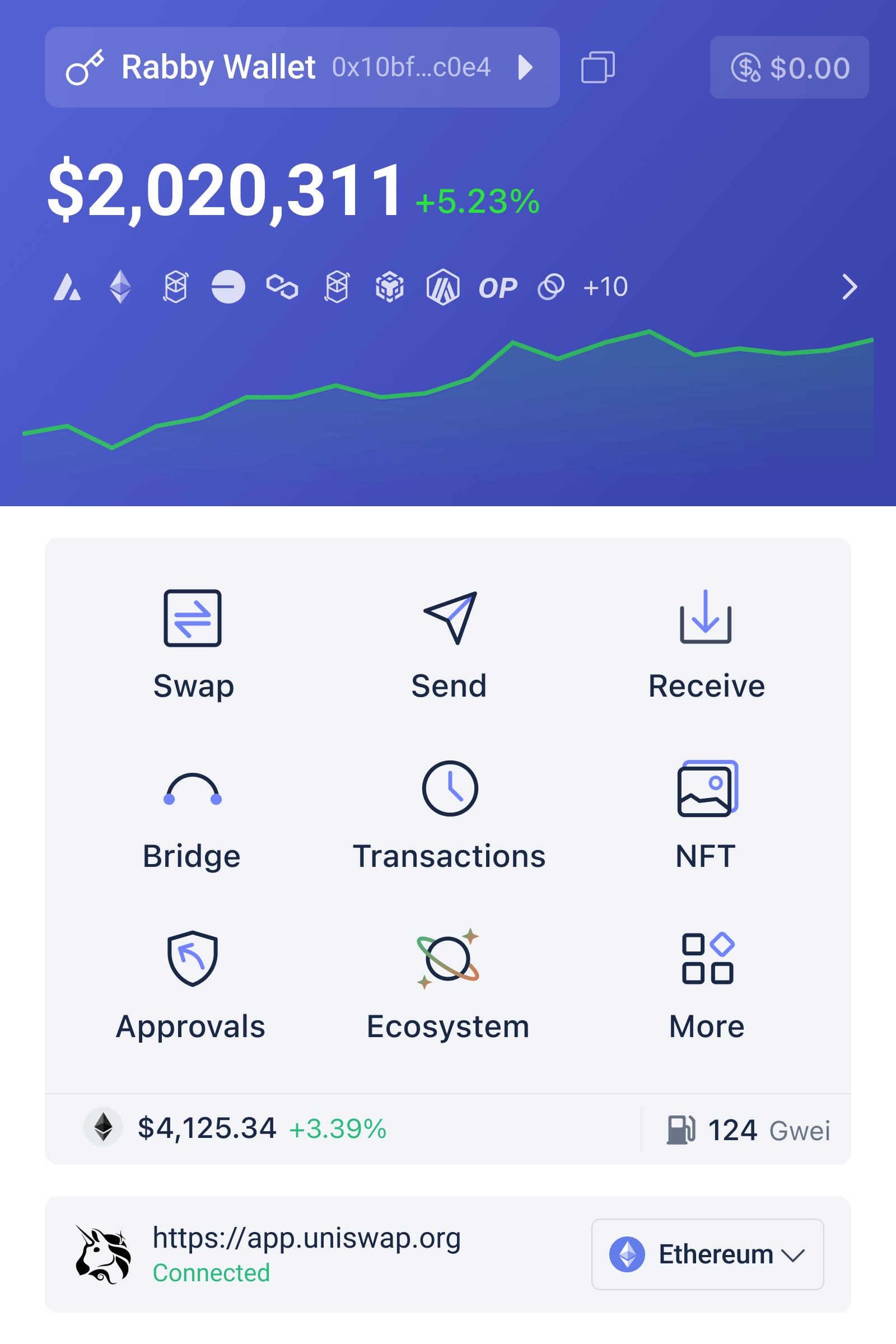
Wallet interface illustrating how users can review DeFi transactions and cross-chain activity before approval

How cross-chain swaps evolved

Early decentralized exchange activity was mostly confined to a single network. A user could exchange one token for another through an automated market maker, a smart-contract system that prices trades from available liquidity. The transaction stayed within one chain, so the main concerns were slippage, gas fees, contract risk, and whether the user had approved the correct token.

As multiple networks developed, users wanted to move assets between them without relying entirely on centralized exchanges. This produced several families of cross-chain designs. A bridge may lock or escrow an asset on one network and release, mint, or represent value on another. A cross-chain swap service may coordinate liquidity held on both networks. More recent systems can use an intent model: the user states the desired outcome, while a solver or relayer finds a route and executes the necessary steps.

These approaches can look identical from a front end. The user selects a source token, a destination token, and a target network. Mechanically, however, they are not identical. A route may require a token approval, a swap, a bridge message, a claim, or a second swap. Some steps are executed by the user; others depend on an external party observing one chain and responding on another.

This is the first important distinction: a cross-chain swap is often a workflow, not a single atomic transaction. On one chain, a transaction can usually succeed or revert as one unit. Across chains, there may be no universal rollback button. If the first leg succeeds and the next leg is delayed, rejected, or economically unattractive, the user may temporarily hold an intermediate asset or need to complete an additional action.

What a Rabby browser extension can contribute

A browser wallet sits at the authorization boundary between a user and a decentralized application. It connects to websites, identifies the selected account and network, requests signatures, and sends approved transactions to the relevant chain. Users considering a rabby wallet installation should think of the extension less as a passive vault and more as a transaction review surface.

That review surface is valuable because DeFi interfaces often describe an outcome in simple language while the wallet receives technical instructions. A button may say “swap,” but the transaction could call a router contract, spend a token allowance, transfer funds to a designated address, or interact with a contract whose behavior is not obvious from the page. The wallet’s job is to help translate the request into something the user can inspect before signing.

Installation hygiene is part of that security model. A US user should obtain a browser extension only from a source they can independently verify, check the publisher and browser permissions, and avoid copying a recovery phrase into a website or support form. A wallet extension cannot recover a phrase that has been exposed. Nor should a user assume that a familiar logo proves that a download page or DeFi application is genuine.

It is also important to separate the wallet from the protocol. A wallet may display a route, simulate a transaction, or warn about a suspicious interaction, but it does not control the bridge, decentralized exchange, solver, validator set, or destination-chain contract. If a protocol has weak security assumptions or a route depends on thin liquidity, the wallet cannot remove those underlying risks.

Transaction simulation: useful preview, not a crystal ball

Transaction simulation attempts to execute a proposed transaction in an environment that represents the current state of a blockchain, without actually committing the transaction on-chain. In principle, this can reveal whether a call is likely to revert, what assets may be received, whether a balance changes, and whether a contract is asking for an unusually broad permission.

That makes simulation especially useful for a cross-chain workflow. Before signing, the user may be able to see that the expected output is a particular token, that a fee is being deducted, or that a contract call produces no obvious return. A failed simulation can be an immediate reason to stop and investigate rather than repeatedly submitting transactions and paying gas.

But a simulation is a conditional forecast. It answers something like: “What would this transaction do if it were executed against this represented state and under these assumptions?” It does not answer: “Will the whole cross-chain route remain safe and profitable after other participants act?” That boundary is easy to miss.

Blockchain state changes continuously. Another trader can consume liquidity, a gas market can become more expensive, a bridge message can be delayed, or a solver can stop quoting a route. The simulation may also be unable to reproduce off-chain components, private order flow, destination-chain timing, or the behavior of a service that acts after the first transaction. A successful preview therefore reduces uncertainty without eliminating it.

There is a second limitation: simulation can describe execution, but not necessarily legitimacy. A malicious contract may execute exactly as programmed while transferring funds somewhere the user did not intend. A token may have unusual transfer rules, or a displayed token could be an imitation with a confusing name. “The transaction succeeds” and “the transaction is wise to sign” are different judgments.

A practical framework for reviewing a cross-chain route

Before approving, first identify the desired end state. Which asset should exist on the destination network, in which wallet address, and in what approximate amount? This sounds obvious, but cross-chain interfaces can display a familiar ticker while using a bridged or wrapped representation. The symbol alone is not enough; the destination token’s contract and intended use matter.

Next, ask how many stages are involved. Is there an approval? Is the source asset swapped before bridging? Does the destination asset arrive automatically, or must the user claim it? Does the route rely on a third-party solver? The more stages a route contains, the more important it becomes to record transaction hashes and understand what happens if only part of the workflow completes.

Then examine the economic assumptions. A quoted amount is usually an estimate, not a fixed promise. Slippage is the difference between the expected and actual execution price; cross-chain routes can add bridge fees, relayer fees, gas on multiple networks, and liquidity costs. A route with a slightly better headline exchange rate may be worse after all fees, especially for smaller trades.

Finally, treat wallet warnings and simulations as evidence to interpret, not buttons to dismiss. If the preview shows an unexpected spender, a large allowance, an unfamiliar contract, or a token transfer that does not match the intended outcome, pause. Recheck the application domain through a trusted path, confirm the network, and consider using a smaller test amount when the route is unfamiliar. A test transaction cannot prove long-term safety, but it can expose address, network, or workflow mistakes.

The trade-off between convenience and control

Cross-chain infrastructure exists partly because users dislike managing separate venues, bridges, and liquidity sources. Aggregated interfaces can save time and may find routes that are difficult to assemble manually. The trade-off is opacity. When several actions are bundled behind one interface, users may understand the destination outcome while missing the intermediate permissions and dependencies.

Manual execution has the opposite profile. It can make each stage more visible, but it increases operational burden. The user must choose a bridge, select a destination asset, manage gas on both networks, and track whether a message or claim has completed. More control does not automatically mean less risk; it can create more opportunities for a wrong network, wrong contract, or insufficient gas balance.

The best approach is proportionality. A familiar, liquid route involving a modest amount may justify a streamlined workflow with careful simulation. A large transfer, a newly encountered bridge, or a route involving an obscure token deserves slower review and perhaps an initial test. The relevant question is not whether a route is “easy” or “advanced.” It is whether the user understands the failure modes that remain after the interface has simplified the process.

There is also a US-specific practical consideration: swapping and bridging can create records that matter for accounting, even when the user thinks of the action as merely moving funds. The tax treatment of digital-asset activity can depend on the assets, cost basis, timing, and transaction structure. A wallet is not a tax advisor, so users should preserve transaction records and seek qualified advice when the amounts or activity are significant.

What to watch as the category matures

The next stage of cross-chain usability will likely depend on better coordination between route providers, wallets, and destination networks. If simulations can represent more of the complete workflow rather than only one contract call, users may receive more meaningful warnings. If they cannot, the industry may continue to face a gap between a reassuring preview and a complicated settlement process.

A useful signal to watch is whether interfaces explain failure recovery as clearly as they explain the happy path. Can the user tell what happens when a bridge message is late? Is there a claim step? Who pays the destination gas fee? Can the route be canceled, or is the first transaction irreversible? These questions reveal more about practical maturity than a polished swap screen does.

Conditional execution may also improve convenience, but it introduces new trust and timing questions. If an external solver or relayer acts on the user’s intent, users need to understand how quotes are enforced, what happens when liquidity changes, and whether the system has fallback behavior. The likely direction is not a world without risk. It is a world where risk becomes more distributed and therefore requires better disclosure.

Cross-chain swap FAQ

Does transaction simulation guarantee that a cross-chain swap is safe?

No. Simulation can indicate how a transaction is expected to behave under a particular blockchain state. It may detect reverts, unexpected transfers, or suspicious permissions, but it cannot guarantee the security of the bridge, the honesty of a route provider, the future price, or successful completion of later destination-chain steps.

Why might a cross-chain swap require more than one transaction?

The source asset may need approval and exchange before it is bridged. The destination asset may then require a claim or a second swap. Cross-chain systems coordinate separate networks, and those networks do not share one universal transaction history or rollback mechanism. Always check whether the quoted route includes additional user actions.

What should I check before installing a wallet browser extension?

Verify the download source independently, review the publisher and requested permissions, and create or import an account only through the wallet’s genuine interface. Never share a recovery phrase or private key with a website, support agent, or application. After installation, confirm the network and account before connecting to a DeFi site.

The central lesson is simple but easy to lose in a smooth interface: a cross-chain swap is a sequence of assumptions about contracts, liquidity, messages, timing, and permissions. A wallet extension can make those assumptions more visible, and transaction simulation can test part of them. Neither replaces judgment. The most resilient DeFi habit is to compare the requested action with the intended end state, understand what can happen between chains, and treat every preview as helpful evidence rather than a guarantee.

Leave a Reply

Your email address will not be published. Required fields are marked *